


Escape from Stranger Things: a season 5 overview

This article contains spoilers for Stranger Things Season 5
After nine long years spent defeating interdimensional monsters, the beloved Netflix series, Stranger Things, has finally ended. With a series full of unexpected twists and turns, much hope rested on season five to deliver a jaw-dropping series finale. Season five was divided into three sections, or ‘volumes.’ Volume 1 dropped on November 26, Volume 2 released on Christmas Day, and Volume 3, the finale, was released on New Year’s Eve.
Volume 1
The season follows the cast four years after Will Byers (Noah Schnapp) was taken to the Upside Down. Volume 1 starts off 18 months after the events of season four, where Hawkins is under quarantine, and the crew is conducting ‘crawls’ to the upside down in search of Vecna. While they are able to sneak under the radar of the government, they realize the government had different plans, and were instead interested in finding Eleven/Jane Hopper (Millie Bobby Brown).

Volume 1 was a great start and introduction to the finale. While the large timeskip put many people off, it was able to quickly get back on track with immediate action. Episode four is easily the best episode of this volume, and of the season in general. Ranked 9.3/10 on IMDB, the episode ends with two huge cliffhangers: Kali (Linnea Berthelsen), Eleven’s sister, returning to the show, and Will Byers gaining telekinetic powers similar to Eleven and Vecna.
For a mid-finale episode, Stranger Things 5 hits it out of the ballpark. The great setup to Sorcerer is executed perfectly, and the cliffhanger held people chokehold for a month until Volume 2 released.
Volume 2

Volume 2 picks up exactly after the events of Sorcerer with the cast figuring out the mystery behind the Upside Down, and coming up with a way to finally stop it once for all. This volume doesn’t focus on many big actions, especially Episode 7 that primarily sets up the finale.
Out of this volume, my favorite would be Episode 6: Escape from Camazotz. Many people dislike the Holly Wheeler (Nell Fisher) and Max Mayfield (Sadie Sink) storyline, but seeing the two of them figure out how to escape Henry’s memory easily made them one of my favorite duos. We also finally figure out what exactly the Upside Down is: a wormhole created by Eleven when she connected with a Demogorgon the day Will Byers was first kidnapped. The episode ends with Holly and Max escaping Vecna’s mind prison, with the cliffhanger of Max finally reawakening from her coma.
However, my least favorite episode out of the season has to go to Episode 7: The Bridge. This episode involves the least action, as everyone regroups and relays all their respective information about Vecna + the Upside Down, and a way to stop it. Most of the episodes involve a specific way of telling the audience the main points, which is usually, if not always, very direct, or using metaphors/example props. This episode is littered with these types of explanations, which makes the episode feel repetitive and boring.
With this lifeless volume, much hope and faith rested upon the 2 hour finale.
Volume 3

The Volume 3, released on New Years Eve, and suffice to say, was not received positively at all. The two hour finale featured the cast facing Vecna in his own domain called Dimension X, along with a 40 minute epilogue to tie everything together.
The finale achieved the exact opposite audiences hoped for. Many interesting storylines and plotholes were never mentioned or closed up, and the final battle only took around six minutes. This lackluster battle was then followed by Eleven sacrificing herself in the Upside Down, wiping the dimension, and her, from existence. The epilogue then proceeded to showcase the main cast 18 months later; the main 5 kids graduated from high school, and a new generation of children are seen playing D&D.
The finale episode was definitely underwhelming. Many of the questions fans had were left unanswered, leading to the Duffer Brothers to clear up confusion in a string of interviews. These interviews, however, led to even more outrage with fans. The Duffer Brothers did admit after that they should have not done any of them.
"I am not in a good place. Like, why the hell did we do any of them yesterday is beyond me. I'm like fried. I was getting over the flu. So, anyone mad at any answers we gave you yesterday, just cut me some slack." - Matt Duffer
Aftermath
With such a mediocre season wrap up, it’s of course no reason why fans of the show were displeased. However, the chatter around the show didn’t end with the credits. It grew even louder, with fan theories exploding online, the dissection of queer media throughout the show, and many reasons why the finale turned out the way it was.
Fan Theories
Even before season 5 released, many users online came up with outrageous and close to accurate fan theories. Some theories were referred to as ‘-gates,’ relating to the gates that were opened/created in the 4th season. These theories touch upon inconsistencies of Will’s age + birthday, to even the whole series being Mike Wheeler’s D&D campaign to cope with Will’s death.
However, many of these theories never became mainstream, until Jan 1st, when X user @.67gate posted a tweet saying, “lowkey does anyone find it weird how every single character in the end turned into a conformed version of themselves.” This tweet has 896k views, with 38k likes. Since then, this tweet has turned into what is being referred to as ‘Conformitygate.’

The theory consists of how each character in the epilogue becomes a version of themselves which actively goes against who they were/have been building towards. For example, users point out Mike, looking like his emotionally absent father Ted; Nancy Wheeler, who has dropped out of her dream college; and Max Mayfield being short-tempered and destroying items in the Wheeler basement, like her step-brother Billy from previous seasons.
While only starting small, and pointing out these inconsistencies, #ConformityGate eventually reached the general audience, where fans started to believe that the finale of Stranger Things is a “fakeout” finale, and an episode 9 featuring the real and true finale of the show. Unfortunately, with the release of the Stranger Things documentary, and many actors of the show dispelling the rumors, this theory has been debunked. Nonetheless, conformity-gate, as well as countless other fan theories, prove how better fans are at writing and creating story and plotlines for these beloved characters.

Byler + Queerbaiting (Handling Queer relationships)
Shipping, the desire of two characters to be in a relationship, is a significant aspect of any show or fandom. Stranger Things is no exception. Popular ships in the show include Mileven (Mike x Eleven), Jancy (Jonathan x Nancy), and Lumax (Lucas x Max). However, these ships are canon (official) and part of the show. There are also numerous non-canon (or fanon) ships, specifically queer ships, that have emerged. These include Ronancy (Robin x Nancy), Stonathan (Jonathan x Steve), and one of the most popular ships, Byler (Will x Mike).
The name Byler is derived from the combination of Will and Mike’s last names (Byers and Wheeler). This ship has been a part of the show since its inception but gained increased popularity after the release of season 2. Since then, the Byler ship has grown in popularity over the years.
Will has always been considered queer from the very beginning. In the first season, episode 2, Joyce refers to Will as different and not like other kids, hammered in by the fact of his father calling him a queer slur. Although Will was only referred to as queer, the subsequent seasons confirm this assumption. In season 3, Mike and Will get into an argument, resulting with Mike telling Will, “It’s not my fault you don’t like girls.” and his sudden reaction to this comment hinted at this assumption being true. Later, in season 4, it is confirmed that Will does have feelings for Mike. Will gives Mike a painting he made while staying in California, having a heart to heart conversation, and ending up with Will confessing his feelings for Mike, disguising it as Eleven’s. The question of whether Will was gay was then confirmed by Noah Schnapp, who revealed that he was gay himself.

During the period between season 4 and season 5, many fans hoped that these two characters would finally work through their feelings and find each other amidst the chaos of the Upside Down. Unfortunately, with the release of the finale, fans were clearly queerbaited.
Queerbaiting is a strategy used in marketing and storytelling where media or shows drop hints about same-sex romance or LGBTQ+ representation without actually showing it. This approach aims to draw in queer viewers without alienating conservative audiences. It’s something you might notice in shows that blow up in popularity like how Stranger Things did.
Mike and Will have always been tied from the very beginning. Whether it be by their respective colors, repetition of certain numbers, or even their D&D characters, Will and Mike are deeply intertwined in each other’s fates. Will’s queer feelings for his best friend were a fascinating concept when introduced fully in season 4, leaving audiences who grew up closeted in the 80s feeling seen and heard.
And it almost seemed like Byler fans were going to win. In volume 1, many scenes featured Will and Mike together, particularly one infamous field scene, when Mike insists that Will has powers and just needs to unlock them. This quick moment was seen as a stepping stone into deepening their relationship. Robin, a confirmed queer character, is seen after the scene, ‘clocking it’ as confirmed by the Duffer Brother’s script in a behind-the-scenes segment of episode 4. Other notable scenes include a pipe scene and the volume finale moment when Mike is the first to be saved by Will. These moments all felt like a buildup to the potential for their relationship to evolve into something more.
In spite of that, the volumes 2 and 3 released turned out to be extremely disappointing. Volume 2 did not feature Will and Mike together, and the finale included a two-minute scene where Mike apologizes for not knowing about Will’s feelings and instead asks Will to remain his best friend. Later, it was revealed that Noah Schnapp personally requested and advocated for the Duffer Brothers to include a scene that concluded Will’s plot and interest in Mike. When asked about the ship in an interview, the Duffer Brothers mention how the two being together was never in the cards.
Fans were outraged by this throw-away arc. The writing for Will’s character, along with previous mentions, marketing posts and merch anticipating the ship were all for nothing. It also seems that actors were both promised payoffs for their characters, with Finn Wolfhard (Mike Wheeler) saying to fans that his character's obliviousness would pay off, and Noah Schnapp being discreet when fans mentioned Byler. While the ship was never confirmed or even played out to be canon, the Duffer Brothers’ handling of another canon queer ship has also made people very suspicious.
Robin x Vickie was a small addition in season 4, showing Robin’s yearning and struggle being closeted. When season 5 started, their relationship was confirmed and was important with Will finding his own identity. But despite their tight-knit bond, it turns out the couple seemingly broke up off-screen in the epilogue’s 18 month timeskip. The Duffer Brother’s response to this backlash was, ‘High school relationships don’t last.’
Not only were these queer relationships, potential or canon, ruined, but one other factor contributed to fan outrage.
Will’s Coming Out Scene/Review Bombing
In episode 7, right before the cast is leaving for the battle in the Upside Down, Will decides to come out to his mother. What seems to be a very private moment is interrupted by Mike, telling the two that they are about to leave. Mike is about to leave the two again, before Will asks him to stay, and to bring everybody.
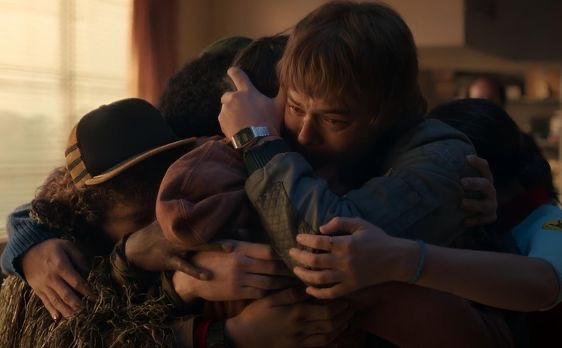
With the entire gang filled into the Radio Shack’s lounge room, Will pours out fears of being alienated for feeling different. He’s afraid of losing the support and friends he has. Jonathan is the first to speak, saying, “You won’t ever lose me,” and thereafter follows many characters saying, “Or me.” The scene ends with a big hug with Will feeling reassured and ready for battle.
This scene was downright corny. Will’s speech is supposed to be private and heartfelt with his mom, yet the addition of characters that Will is not even close with ruins the moment. His speech also includes many incorrect details of his life, including, ‘biking to Melvald’s for malted milkshakes’, when Melvald’s is a convenience store, or ‘getting lost in the woods’ when Will’s most traumatic event was him escaping a Demogorgon through the woods. Also, Will’s whole purpose in coming out to his friends is based on the fact that Vecna had shown him a potential future where everybody leaves him behind, and to combat that, he is forced to come out. Many queer audiences did not feel this coming out scene was true to the LGBTQ+ community, and added on with the fact the scene took 12 hours to film, it became a source of mockery
Episode 7 was the weakest of Volume 2, but it does not deserve the 5.3/10 score it has on IMDB. The episode is piled with countless 1-star reviews, a chunk of them coming from the homophobic general audience members hating this coming out scene. This review-bombing does not reflect the episode as a whole, and instead alerts media and show runners that queer media will not be taken well.
Divorcegate
The writing and storyline in Season 5 (particularly the later half) was downright terrible. The writers were rushed to finish and conclude everything in one go. While writing season 5, they were also juggling the writing of the Stranger Things play, added with the pressure from Netflix and the media to release the season as soon as possible. It’s no wonder the season felt rushed; filming even started before the Duffer Brothers were done writing episode eight. One reason this may be is due to the divorce between Ross Duffer and his ex-wife Leigh Janiack.

Ross Duffer and Leigh Janiack announced their divorce in February 2024, which coincided with the start of writing season 5 and later during the SAG-AFTRA strike. Fans speculate that Leigh Janiack was the driving force behind many of the creative concepts for Stranger Things. Before their divorce, Leigh Janiack directed and co-wrote the Fear Street trilogy, a series of three horror/slasher films set in the 90s that featured queer characters. Many fans feel that Leigh played a significant role in the creation of plotlines in Stranger Things, and with their divorce, they believe the series’ best moments have come to an end. This term has become known as Divorcegate. So far, no word from Leigh Janiack or Ross Duffer has been heard.
Conclusion
There are countless other problems that have arisen since January 1st. From problematic actors, character arcs and relationships destroyed, or the terrible Stranger Things documentary highlighting the Duffer Brothers and their creative decisions, the downfall has felt like a never-ending story. What was once celebrated as one of best supernatural shows in the 2010s has quickly shown audiences that no matter the horrible endings viewers are left with, it proves that communities are able to come together to critique, connect and create something meaningful amid the wreckage.


Awesome article!