


"Every voice matters": a conversation with Wendy Carillo

Updated: Feb 12
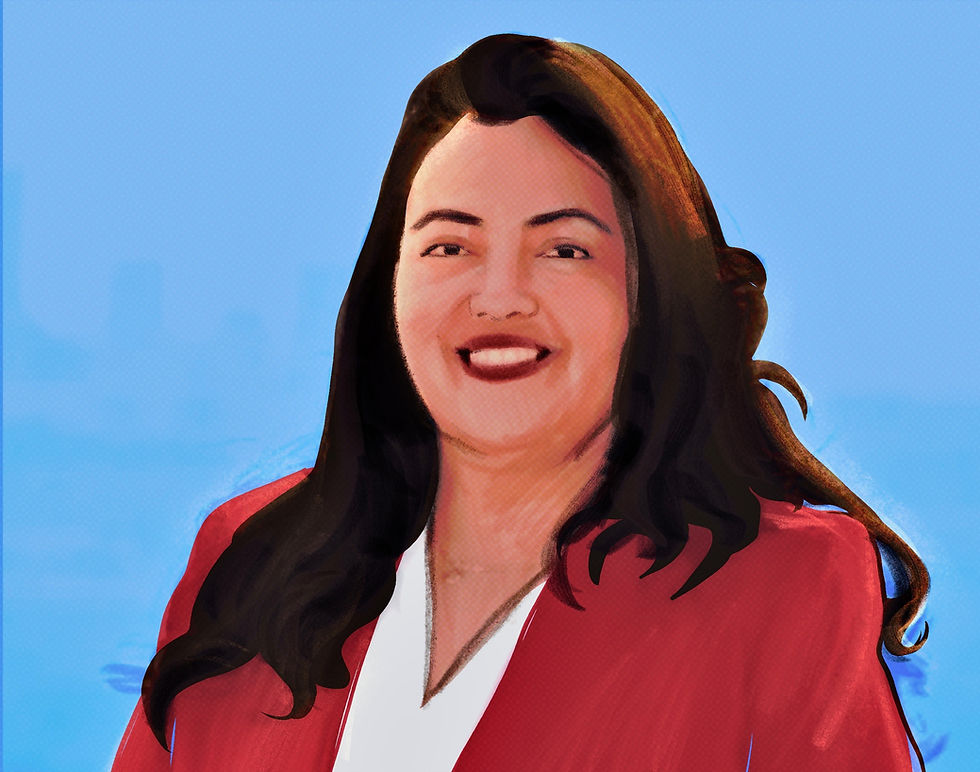
Wendy Carrillo and I sit down at two lawn chairs, and marigolds - in celebration of the upcoming Dia de Los Muertos - lined the fence behind us. The mid-October sun is beginning to near the end of its day’s path across the sky, and a big, fluffy dog, tongue hanging out of her mouth, lies at our feet. The conversation of people mingling (either by a stand from a small business or lounging in a circle a couple feet away) and Bad Bunny fills the backyard. We join in on the soundscape as Carrillo begins to tell me about her experience as a State Assembly member and her campaign running for California State Senator.
Carrillo announced her campaign for California State Assembly in 2017. Before her campaign, she was working as a journalist. When reporting on a protest against the Dakota Corazon Pipeline being built on the Standing Rock Sioux Reservation, she and protesters (including several elders and a woman who lost her eye) were teargassed and hit with a flash grenade. So, when Carrillo saw a congressional seat open, she was inspired to run in the election. During her campaign, Carrillo was told that she didn’t have as much experience as other candidates and needed to wait; it simply wasn’t her turn. But she remained assured that the outcome of the race was the voters' decision and persisted. Carrillo’s family supported her throughout the election, as her parents knocked on doors and made phone calls, recruiting friends as well. Finally, the election would place Carrillo as assemblyperson, where she would serve for seven and a half years.
As an assemblyperson, Carrillo has focused on distributing funding and resources to increase equity and provide opportunities to people that American society has marginalized. She led the creation of a restorative justice budget, which contains millions of dollars reserved to provide more broad-spread educational opportunities as well as money to be donated to organizations such as Homeboy Industries and the Anti-Recidivism Coalition. This funding of educational opportunities aims to help keep people away from incarceration. Additionally, these organizations work to end mass incarceration and help people returning to their communities after being in jail to find opportunities like stable jobs and housing. America’s social contract is if you commit a crime, you pay your debt to society, and then you should have every right to return and find a stable job and housing. The restorative justice budget helps to emphasize this.
Additionally, Carrillo ensured that the county was funded with fifty-million dollars to go towards renovating the old LA County General Hospital. An initial rebuild of the hospital after the 1994 Northridge earthquake lost about 300-400 beds previously utilized for mental health resources. The hospital would be primarily empty for nearly thirty years. Carrillo’s new funding allows the county to retrofit and turn the hospital into a new mental health facility that will serve to get people off the street and into treatment. Additionally, the project creates jobs for construction workers, mental health counselors, therapists, nurses, and doctors. This provides greater resources to assist people suffering from substance abuse, many of whom have been for years and are unable to afford proper health care or are not otherwise able to seek help.
Though it would be vetoed by the governor, Carrillo also worked to end the dual punishment of immigrants. Moving into her election for State Senator, she is incredibly aware of the lack of support towards immigrant communities under the current administration. Carrillo herself didn’t know that she was a naturalized citizen until her mother told her when she was 21. Now moving into a new campaign for the California State Senate, seeing accused illegal immigrants forced into full-body restraints and deported to other countries, many of which they have never been to, adds a much more disturbing component to the environment of 2025’s election as compared to the environment of Carrillo’s first in 2017. As she looks at the current United States government, recent conversations with her dad, a US citizen, about how he can’t go to Home Depot (where he previously was taking classes on craftsmanship) anymore because he fits a specific profile, are at the forefront of her mind.
In such a divided country, Carrillo maintains that it is important to her to treat her fellow candidates with respect and appreciation. She wants to reinforce the idea that everyone’s right is “to live freely and with dignity.” Each candidate will be representing different values, but at the end of the day, everyone is part of one community and one fight: to improve our country and state, even if the focus of that fight looks different for each candidate.
Carrillo believes that in order to realize this dream, the inequity that allows places like Skid Row to come into existence must be diminished. So she works to fight for healthcare, housing, tenant rights, freedom of speech, due process, and against discrimination. If elected, she plans to eliminate loopholes that undo rent-stabilization and incentivize building affordable housing created in laws such as the Costa-Hawkins Rental Housing and Ellis Acts. Carrillo also plans to allocate more resources towards creating opportunities for professionals who focus on easing the rent crisis and displacement. This push must start at a community level to encourage the construction of buildings with more stories that would allow for more living space. Small actions like this can create huge changes in easing problems like Los Angeles’ homelessness crisis.
As reflected in her attempts to pass bills banning collaboration between law enforcement and ICE when she was initially elected, in all her work, Carrillo works not only to solve current problems but also to look to the future to prevent relying only on reactions.
Carrillo emphasizes that moving forward, voter suppression in elections is much easier to achieve by those who wish to keep specific groups away from the polls. The ability to question a person’s citizenship allows for even greater numbers of cast ballots to be thrown out. Additionally, politicians must ensure that ICE is not allowed to intimidate voters away from being able to cast their ballots. At the same time, politicians fear facing even more federal cuts that will significantly impact jobs, healthcare, and resources to education. When aiming to gain a stronger voice on a federal level, Carrillo encourages Californians to think about how many resources the state provides nationally, and acknowledge how the current administration still attempts to impact Californians’ freedoms.
As a small breeze of night air floated past, Wendy Carrillo and I wrapped up our discussion by talking about what students looking to make change can do, most importantly of which is to stay engaged and speak up in their communities. Students can get engaged by remaining up to date on politics (especially news that affects you or your community) and holding elected officials accountable. Asking politicians questions about their actions or decisions is important to ensure that more voices are heard. Additionally, California recently passed a law that allows 16-year-olds to pre-register to vote, easing the process so that they can vote immediately once they turn 18.
By the time the election for California Senator comes, these marigolds will have begun to decompose and reseed, but the problems that Wendy Carrillo and I discussed will ensue.


Comments