


El Niño: what to know

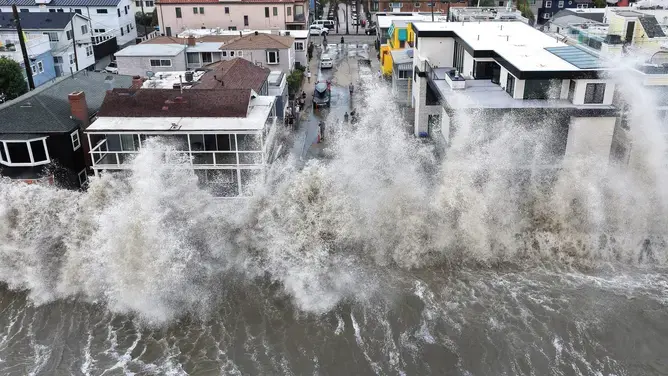
Everybody’s been talking about how bad El Niño will be this year, but does anyone really know how it will hit us here in Los Angeles?
In case you didn’t know, El Niño is a weather pattern, which according to the National Ocean Service, happens every two to seven years. Of course, weather patterns are a force of nature and can’t be exactly predicted. Typically lasting 9 to 12 months, El Niño pushes warm, wet weather back towards Southern California, and heats up the Northern parts of the West coast as well.
In the past, El Niño has mainly affected sea levels and the amount of precipitation we get. Because of the rising sea levels, it’s mainly coastal homes that are in danger. Flooding, beach erosion, and heavy rain can heavily affect seaside properties if you aren’t cautious.
One thing that certainly piqued my interest was El Niño’s unusual name. If you’re familiar with the word, you probably noticed that El Niño translates to “the boy” or “Christ child” if you’re talking only about the weather pattern,which is an odd name for a weather pattern. In case you were curious, the odd weather pattern was first observed by Southern American fishermen who named it El Niño because it peaks around Christmas time. Years later, when scientists discovered the other weather pattern that happens as sort of an opposite to El Niño, they named it La Niña (the girl) in response.
On a more serious note, you might notice that it can affect the natural world as well. As you may know, climate change greatly affects temperature worldwide. Temperatures are already rising and El Niño will only make the world warmer. One thing that isn’t commonly brought up when talking about El Niño is how it can affect coral.
Coral bleaching happens when drastic environmental changes “stress out” the coral. This leads to it forcing out the zooxanthellae (miniature algae) that reside inside the coral. Since the zooxanthellae is what gives coral color, it turns white and can die if it’s gone for too long.
Besides the coral and other marine life, animals on land can be endangered because of the harsh, unfamiliar weather as well. According to the World Wildlife Fund, August 2026 was the hottest month for ocean temperature ever recorded. El Niño definitely didn’t help, but combined with the already hotter temperatures because of climate change, wildlife is being affected more than ever.
Now, you might be wondering, “if El Niño comes around every few years, why is everyone in such a frenzy about it?”
Well, what we do know is that according to the Climate Prediction Center’s diagnostic, the El Niño of 2026-2027’s has “a greater than 90% chance of a very strong event” during this fall or winter. The announcement didn’t elaborate much on what they meant by “a very strong event”, So take this with a grain of salt, but from what I understand, this means El Niño has a very high likelihood of strengthening to an extreme point. The Climate Prediction Center’s diagnostic also said “there is a 75% chance of a historic event”. This means that there is a 75% chance of this year’s El Niño being the strongest one since we started recording them. Of course, El Niño hasn’t yet reached its peak and weather is very unpredictable, so you can’t be sure of what’s going to happen.
Because of our western (and somewhat coastal) location, you might be a bit worried about how El Niño might affect us. Despite the beauty of the California coastline, we should be thankful we live more inland right now. Because most of the extreme weather is going to affect households on the coast (with flooding and erosion), we don’t need to be too worried.
Likely, the most El Niño will do is bring more rain. This wouldn’t be a problem in any other city that could function in wetter weather, but unfortunately, Los Angeles floods, crumbles and is just generally hard to navigate in the rain. I’d recommend checking up on your coastal houses if you happen to be in the position where you can afford one, and bringing an umbrella to school on days that look a bit too overcast.
However, right now our main concern shouldn’t be how to “survive” El Niño, but should be how climate change is affecting this natural weather pattern. El Niño is an unavoidable force of nature, but our habits and destructive pollution is only making the effect it has on the natural world worse. Stay safe, and stay dry, but most importantly, spread awareness.
Sources:


Comments