


The best of black and white

When we were children, many of us saw black and white images or films and cringed at how colorless the world used to be. How sorrowful, dreary, and old these stifled landscapes and people seemed— holding their breath in muted, bound anticipation. Of course, when we learned this was just a filter on the world, all an illusion, we rejoiced that the people of that era were indeed colorful and lived just like us. Yet still, that sense of ominous distance— of a restrained breath and dead memories lingered like a silenced man. Capturing that feeling and doing this well, is the magic of monochromatic films.
So much of what we perceive and how we understand the world relies on color. When we remove color from the equation of film, the filmmakers are required to maximize the use of contrast and lighting to get ideas across. Recently, as I’ve been watching numerous older classic films trying to refine my cinematic palette, I’ve noticed that many of these movies manage to tell stories not just on par with, but often so much better than a significant amount of commercial films nowadays. I found this dangerously impressive and I quickly fell down a rabbit hole, expanding my radar for older films; this list being the culmination of that fascination. I truly believe that all the films on this list are genius pieces that prevail in this day and age despite being colorless.
Here, I’ve put together ten of my favorite black and white movies spanning from the years of 1921 through 1977 and covering a handful of genres. I’ve found that many modern day black and white films just don’t hit the mark as well as the gorgeous pieces of art I’ve listed below. I guarantee you, these films will open your mind to the artform of monochromatic film.
Metropolis (1927 – restored 2015)
Revered by modern-day critics, this artful comment on class disparity and segregation was censored by its film studio due to its alleged communist subtext and politically questionable themes. Set in the far-off year of 2026, Fritz Lang’s absolutely classic film discusses pro-pacifism and anti-capitalism views that are especially pertinent to many political and social discussions in this day and age. It also dissects issues with artificial intelligence and religion, following a young aristocrat that is entranced by a beautiful woman causing him to learn of the masses of workers under his city that live a life of labour and squalor running his father’s metropolis.
Brigitte Helm (playing Maria and her demonic robotic counterpart) is an artistic gem and plays her dual parts with the utmost confidence and finesse. Perhaps the greatest tragedy of this film is the few minutes of her performance that are still lost to time, as the movie has yet to be fully recovered.
Available for free on Youtube or Kanopy (LA Public Library as of October 4, 2026)
Dr. Strangelove or: How I Learned to Stop Worrying and Love the Bomb (1964)
Dr. Strangelove is a witty piece of political satire depicting what would happen if you gave a psychotic air force general nuclear capabilities. Twisting through B-52 bomber crew cowboys, a strand of the US army attacking themselves, the stealing of bodily fluids, and an ex-Nazi doctor in charge of scientific advisory in the president’s war room, Stanley Kubrick’s Dr. Strangelove traverses both everywhere and nowhere the average viewer would expect.
Kubrick’s cold war comedy is a masterpiece in comedic timing and political commentary. Even though every second counts, every character in this movie can’t help but waste a bit of time trying to stop the world from ending; a commentary on the folly of humankind. The writing and acting is also brilliant and from start to finish every character is outstandingly portrayed with comic nuance and strong motives.
Rentable from Apple TV, Prime Video, and Fandango for $3.99
Sunset Boulevard (1950)
Billy Wilder’s genius piece critiques and reveals the deepest depths of evil lingering within Hollywood. Following a young man who gets into some trouble and ends up taking refuge in an old silent film actress’s mansion, Sunset Boulevard tells the story of his slow descent away from regular life and finally to death. This movie is incredibly important and remembered for its famous final monologue (by silent actor Gloria Swanson) that explores the twisted mind of a Hollywood actress left behind by the film industry.
The heartbreak and nostalgia that is so prevalent in this film mixed with the empty wealth and references to mental illness all deepen the simple idea of a star of the past longing to return to her old days of fame and beauty. This movie is heart-wrenching and is a must-watch for all fans of film.
Available for free on Kanopy (LA Public Library as of October 4, 2026)
Night of the Hunter (1955)
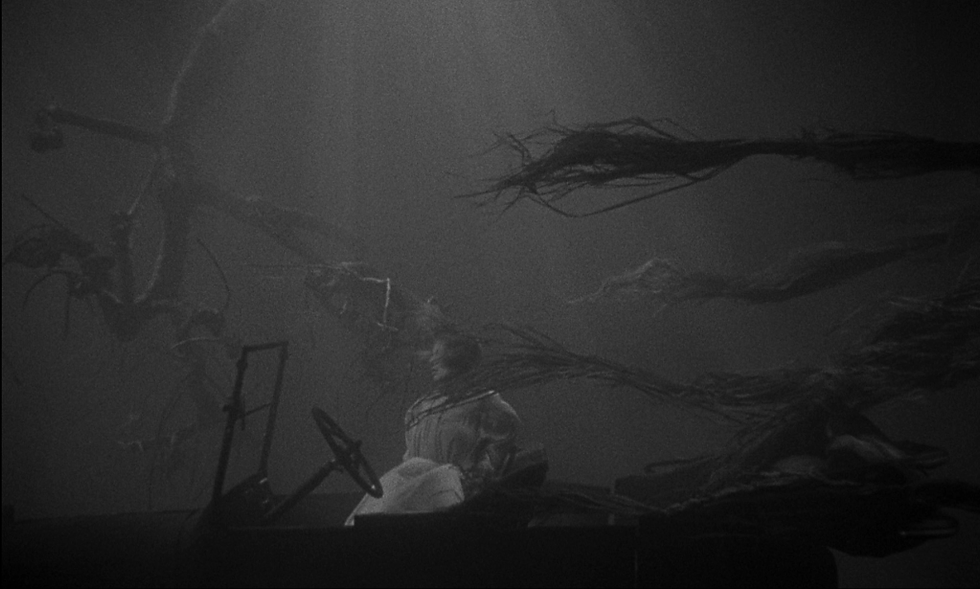
Despite being one of the lesser-known movies on this list, Charles Laughton’s Night of the Hunter does not fall short of any critics’ and audiences' high standards. Set in rural West Virginia, the movie opens with a young boy and girl’s father telling them the location of illegally attained money before he is taken away by cops to be hanged. After their mother is widowed, a pseudo-preacher of “good christian values” appears and seduces her with the intention of coaxing the location of the money from her children. What follows is a manipulatively murderous hunt through the rivers and farms of the mid-Depression south as the children run for their lives, pursued by a madman.
This movie is a visual feast that utilizes shadows and light-play, perfecting the feeling of a childhood fairy tale turned nightmare. The disconcerting and eerie music choices perfectly capture and strengthen the atmosphere of the movie and the incorporation of religion gives viewers a sense of unease that makes you feel like you are the children being hunted.
Available for free on Youtube, Tubi, and Pluto TV
Eraserhead (1977)
Eraserhead, the first full-length feature directed by surrealist David Lynch, is avant-garde film that explores themes of adult responsibility and unexpected fatherhood through industrial landscapes and graphic imagery. Following a man navigating the nightmare of his fatherhood, Eraserhead depicts him being left with his own grossly deformed baby in a shadowed, dilapidated apartment. In the end, after hallucinations drenched in subtext, a disgusting illness, and a visit from a dancing lady in his radiator, he’s forced to make a horrible choice.
Despite its deceptively simple plot, the depth of this film really is incomprehensible; it’s more of a feeling than a story, as many familiar with Lynch’s movies can understand. The powerful images presented in this film mesh harmoniously with the black and white style in a way I still struggle to understand.
Available with an HBO Max subscription or rentable from Apple TV and Prime Video for $3.99
Casablanca (1942)
Frequently praised by critics as one of the best movies ever, Micheal Curtiz's Casablanca follows a man who gets himself in a messy situation; sandwiched between Nazis, a Czech resistance leader, and his ex-lover. This movie is often considered Allied propaganda, as the main character has to make a choice to leave behind his political neutrality to help the Allies, or allow a powerful leader to fall to the hands of the Nazis while his establishment is allowed to remain open. Casablanca is yet another true classic that is referenced often (for example, the lines “Here’s looking at you, kid” or “We’ll always have Paris”) and is often used as a reference for various set and scene designs.
Available with an an HBO Max subscription or rentable on Apple TV or Prime Video for $3.99
Psycho (1960)

Often considered a landmark in Hitchcock’s career, Psycho is a masterpiece of psychological horror that broke previously established rules and helped define a genre. It manipulates the audience's emotions and plot expectations, culminating in one of the most famously shocking twists in cinema history. It also featured scenes that broke 1960’s censorship norms by portraying a woman in her underwear, an unmarried couple in a hotel room, and even the sound of a flushing toilet. It was one of the first movies to explore human psychology as an aspect of horror instead of relying on visual scares like monsters. With the emotional cliff this movie pushes you off, it’s very hard to recommend it without giving away the best parts; it's better to just go watch it yourself!
Available with Peacock subscription or rentable from Apple TV or Prime Video for $3.99
His Girl Friday (1940)
His Girl Friday is a screwball romcom highlighting a couple of slightly crooked journalists who get their hands a little too dirty trying to chase a good story. Director Howard Hawks had actors talk over one another and hold multiple conversations simultaneously with ridiculously fast-paced dialogue, creating an intricate story that fosters a genuine feeling of a busy press room. The romantic tension helps lend a hand to the comedically insane situation the two main characters find themselves in and Cary Grant and Rosalind Russell’s portrayals reinforce the strong characters with dynamic personalities and desires. Make sure not to watch this movie while multitasking; every scene the situation gets even more complicated and trickier for the main characters to weasel their way out.
Available for free on Youtube, Fandango, Tubi, and similar platforms.
It’s a Wonderful Life (1946)

This holiday-themed film is a wholesome piece about a man who selflessly gives up his life’s dreams to help his neighbors, prompting a visit from a guardian angel who shows him what life would be like without him. This movie celebrates what it is to be human by exploring the absolute lowest points of life and balancing it with the triumph of community and kindness.
Directed by legend Frank Capra, this often holiday-associated film is an annual watch for many and is a testament to love and humanity. The film heavily emphasises the beauty of regular life and being a good person even when those around you seem to be achieving more and being more than they think you will ever be.
Available with Prime Video subscription or rentable from Apple TV for $3.99
Citizen Kane (1941)
Many critics and filmmakers exalt Orson Welles’ Citizen Kane as “the best movie ever” revolutionizing the film industry upon first run with its creative new cinematographic techniques and narrative complexity. Based on famous newspaper monopolist William R. Hearst, Citizen Kane views a fictional rich man of similar status to Hearst and reveals a narrative using flashbacks told from subjective perspectives that give it flavor and personality. A masterclass in character writing, Citizen Kane only says what needs to be said and lets the visuals guide the audience’s mind in doing the rest.
Rentable on Prime Video, Apple TV, and Fandango for $3.99.
Runners up:
Some Like It Hot
The Kid (Charlie Chaplin)
8 ½
À bout de souffle (Breathless)
I hope you have as much fun watching these wonderful movies as I did!


Comments